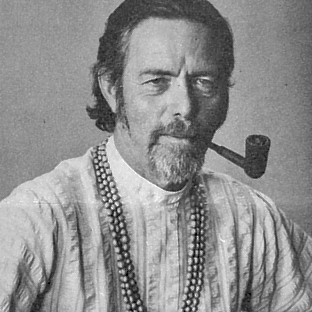
Navigating the Art of Life: A Zen Perspective
Alan Watts's assertion that "the art of life is more like the navigator's art than the warrior's" invites us to reconsider our approach to existence. Rather than viewing life as a battleground where we must conquer challenges with force and aggression, Watts suggests a more fluid and adaptive stance. This perspective emphasizes the importance of navigation—of understanding, intuition, and responsiveness to the currents of life. In a world often characterized by conflict and competition, this shift in mindset holds profound implications for how we engage with our experiences and relationships.
At its core, this quote challenges the conventional notion of success and achievement. The warrior's art is about domination and control, while the navigator's art is about awareness and harmony with the environment. This distinction is crucial in a time when many feel overwhelmed by the pressures of modern life. By embracing the navigator's approach, we can cultivate a sense of peace and purpose, allowing us to flow with the rhythms of existence rather than resist them. This understanding is not merely philosophical; it has the potential to transform our daily lives and interactions.
The image / the metaphor
The imagery of navigation evokes a sense of journeying through unknown waters, where the navigator must be attuned to the winds, tides, and stars. This metaphor speaks to the necessity of being present and aware, of reading the subtle signs that life presents. Unlike the warrior, who charges ahead with a predetermined goal, the navigator adapts to the ever-changing landscape, making decisions based on intuition and experience. The verbs chosen—"navigate" versus "warrior"—suggest a dynamic interplay with the environment rather than a rigid confrontation.
Diving deeper into this metaphor, we can see that navigation requires a deep trust in oneself and the surrounding world. It is an art that involves both skill and surrender, a balance between knowing when to steer and when to let go. The navigator must cultivate a sense of inner calm and clarity, allowing them to respond effectively to the challenges that arise. This approach to life encourages us to embrace uncertainty and to find beauty in the journey itself, rather than fixating solely on the destination.
In the speaker's tradition
Alan Watts, a prominent figure in the popularization of Eastern philosophy in the West, draws heavily from Zen Buddhism and Taoism. Within these traditions, concepts such as *sunyata* (emptiness) and *wu wei* (effortless action) resonate deeply with the idea of navigation over warfare. The notion of *sunyata* invites us to recognize the fluidity of existence, suggesting that our rigid attachments to outcomes can lead to suffering. Instead, by embracing the emptiness of our expectations, we can navigate life with greater ease and grace.
Living the teaching
Consider a modern scenario where this teaching can be applied: a professional facing a significant career transition. Instead of approaching this change with a warrior's mindset—fighting against uncertainty and striving for control—the individual can adopt the navigator's perspective. By embracing the unknown, they can explore new opportunities, seek guidance from mentors, and remain open to unexpected paths. This shift allows for a more enriching experience, where the journey itself becomes a source of growth and discovery.
A reflection
As we contemplate Watts's wisdom, we are invited to reflect on our own lives: Are we approaching our challenges as warriors, seeking to conquer and control, or as navigators, open to the flow of experience? This question encourages us to examine our responses to life's uncertainties and to consider how we might cultivate a more harmonious relationship with the world around us. In what ways can we embrace the art of navigation in our daily lives, allowing ourselves to be guided by intuition and awareness?



Join the BrightStar Community
Stay connected with daily inspiration, event announcements, and community wisdom