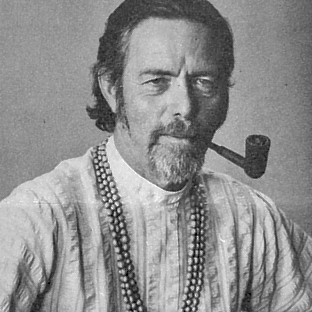
Embracing the Flow: The Wisdom of Letting Go
Alan Watts poignantly observes that "the more we try to control, the more life eludes us." This statement encapsulates a profound truth about the human experience: our attempts to impose order and predictability often lead to frustration and disconnection from the very essence of life. In a world that frequently rewards control and certainty, this insight invites us to reconsider our relationship with the unpredictable nature of existence. It challenges us to explore the delicate balance between intention and surrender, urging us to find peace in the flow of life rather than in the illusion of control.
Watts's words resonate deeply in a culture that prizes achievement and mastery. The relentless pursuit of control can create a sense of alienation, as we become ensnared in our own expectations and desires. This quote serves as a reminder that life is inherently dynamic and fluid, much like water, which is a central metaphor in Watts's work. By recognizing the futility of rigid control, we open ourselves to a more authentic engagement with the world, one that embraces uncertainty and invites us to dance with the rhythms of existence.
The image / the metaphor
The imagery in Watts's quote evokes a sense of struggle against the natural currents of life. The verbs "try to control" and "eludes" suggest a dynamic tension, where our efforts to grasp and hold onto experiences only serve to push them further away. This metaphor of life as a flowing river illustrates the futility of clinging tightly to our desires or fears. Instead of navigating the waters with grace, we may find ourselves flailing against the current, exhausting our energy in a futile attempt to dominate what is inherently uncontrollable.
Diving deeper into this metaphor, we can see that water symbolizes adaptability and resilience. Just as water takes the shape of its container, life requires us to be flexible and responsive to change. When we release our need for control, we can learn to flow with the circumstances we encounter, allowing us to experience life more fully. This fluidity fosters a sense of connection with the world around us, enabling us to respond to challenges with creativity and openness rather than resistance.
In the speaker's tradition
Alan Watts's insights are deeply rooted in Zen philosophy, which emphasizes the importance of living in harmony with the present moment. Concepts such as sunyata, or emptiness, and dharma, the natural order of the universe, resonate with his teaching. In Zen, the idea of letting go of attachment and control is essential for achieving a state of enlightenment. By relinquishing our grasp on the illusion of permanence, we can cultivate a deeper understanding of the interconnectedness of all things, allowing us to experience life as it truly is, rather than how we wish it to be.
A relevant text that echoes this sentiment is the Tao Te Ching, where Laozi speaks of the value of wu wei, or effortless action. This principle encourages us to align ourselves with the natural flow of life rather than striving against it. Just as water flows effortlessly around obstacles, we too can learn to navigate our lives with grace and ease when we embrace the wisdom of letting go. In this way, Watts's teachings serve as a bridge between Eastern philosophy and contemporary understanding, inviting us to explore the depths of our own experience.
Living the teaching
Consider a modern scenario where this teaching might apply: a professional striving for success in a competitive workplace. The pressure to control outcomes, impress superiors, and achieve specific goals can lead to stress and burnout. By recognizing the futility of trying to control every aspect of their career, this individual might instead focus on cultivating their skills, nurturing relationships, and remaining open to unexpected opportunities. In doing so, they may find that success comes more naturally when they allow life to unfold rather than forcing it into a predetermined mold.
This teaching also finds resonance in personal relationships, where the desire to control can create tension and distance. Imagine a couple navigating a disagreement; if one partner insists on being right or controlling the conversation, the connection may fray. However, if both individuals practice the art of letting go—allowing space for vulnerability and understanding—they can foster a deeper bond. By embracing the flow of their emotions and experiences, they create a safe environment for growth and intimacy, ultimately enriching their relationship.
A reflection
As we contemplate Watts's profound insight, we are invited to reflect on our own lives: in what areas do we cling to control, and how does this impact our experience of life? Consider the moments when you have felt the most alive—were they times of rigid control or moments of surrender and flow? By examining these questions, we can begin to understand the transformative power of letting go, allowing us to engage more fully with the beauty and unpredictability of existence.



Join the BrightStar Community
Stay connected with daily inspiration, event announcements, and community wisdom